Lesson Preview
Objective
Understand how and why to dress professionally for your job
as a homemaker
Assignment Summary
Put “get dressed” and “lay out clothing for tomorrow” in
morning and evening routines in your BOPO
Get completely dressed (including shoes, hair, face,
accessories, etc.) for one week. Share your experience on our Facebook page.
Recommended Reading
http://tolovehonorandvacuum.com/2013/03/fight-the-frump-get-dressed/
Lesson
“The best asset we
have for making a contribution to the world is ourselves. If we underinvest in ourselves, and by that
I mean our minds, our bodies, and our spirits, we damage the very tool we need
to make our highest contribution.” –Greg McKeown, Essentialism: The Disciplined Pursuit of Less, page 94. 2014.
Energy Investing
It takes lots of energy to keep up with all the roles you
fill as a career homemaker. But for most of us, our energy is limited. However,
like time and money, if invested properly, energy can yield more in kind: if I
put my energy toward the right activities, I’ll have more energy for everything
else. This is, for me, what it means to invest in ourselves. I call it “energy
investing.” (I recommend reading more about this concept in this Harvard Business Review article on
shifting our focus from time management to energy management.)
Many activities could be considered “energy investments.” My
top five energy investment opportunities I aspire to do daily are as follows:
- Sleeping and waking early
- Exercising
- Eating right
- Renewing my spirit through prayer/meditation and study
- Getting dressed
What? Getting dressed is a top five energy investment
opportunity? Yes. Today’s lesson focuses on how getting dressed for your
profession is an investment in yourself and your energy. We’ll also cover how
to dress for a homemaking profession. I won’t cover other energy investment
opportunities in this course; however, I strongly urge you to consider what
kinds of energy investments will make the biggest difference in your energy
levels and work some of these practices into your routines right away.
Why Get Dressed?
Now, many of you already get dressed up daily, especially if
you work outside the home. But some of us stay-at-home homemakers struggle to
feel like it’s worth it because it’s a lot easier to just live in sweats
because no one sees us anyway, so why put forth the effort?
But the thought that “no one” sees us is a lie.
The most important people in our lives—those that live in
our home with us--see us. And perhaps more importantly, we see us. I mean, you
see yourself.
You are the most important person of all to dress up for.
You’re worth it.
Let me ask: How much energy do you feel like you have if you
look in the mirror and see yourself like this?

Contrast that with this:
 |
| Images from The Art of Homemaking by Daryl V. Hoole page 13 |
When you pass yourself in the mirror and you see someone
attractive and put together, you get an energy boost every time.
And getting completely dressed—including doing hair,
make-up, shoes, and accessories—is not hard or even very time-consuming! For a
fantastic blog post on this, please
go here. Notice this blogger’s before and after
pictures of herself and how long it took her to put herself together in each
instance. Don’t forget to come back to this lesson!
It’s pretty obvious to most of us that getting dressed for a
job is a matter of professionalism, and many people understand that dressing
right could actually make or break your career. But somehow this idea gets lost
when it comes to the homemaking profession. So how should you dress for your
career as a professional homemaker? The quick answer is to dress both
practically and attractively. Here’s what that means to me.
Shoes
The FlyLady has a whole article on why you should wear good
“lace-up” shoes (meaning a good pair of athletic shoes like cross-trainers or
something supportive) whenever you’re working in your home. After testing out
her method in this respect, I’m converted. Read
her article here. When I wear good shoes for my job, I
- have better posture, which promotes overall health and energy
- can move more quickly
- don’t get sore feet while working on harder floors in my house
- don’t stub my toes or soak my socks in mystery puddles (we all have them somewhere in the house)
- feel ready for any job I need to do
You may want to get a good pair of shoes just for working
inside the house to protect your floors more and to be a bit more sanitary.
Clothing
I find it fascinating that in most books, blogs, and methods
I’ve encountered on the subject of homemaking and housework, proper dress is
discussed, and is often one of the first things prescribed. In fact, the
importance of getting properly dressed for homemaking has been recognized for hundreds of years. Consider the
following quotes from chapter 1, section 5 of The English Housewife by Gervase Markham written in 1615:
“Let therefore the
housewife’s garments be comely, cleanly and strong, made as well to preserve
the health as adorn the person, altogether without toyish garnishes, or the
gloss of light colours, and far from the vanity of new and fantastic fashions,
as near to the comely imitations of modest matrons.”
No better advice has been given yet on this subject. Gervase
nailed it clear back in 1615. When you dress for your job, go for what supports
you well and watch out for the "gloss of light colours" or things that will wear out and
stain quickly, and avoid “toyish garnishes” that interfere with your work. But
be sure to go for “comely” (attractive). I could end with this quote, but here’s
another good piece of advice and perspective from the 20th century:
“If you look like the
family doormat they’ll walk all over you. If you look pert, neat and attractive
and as though you had some opinions and rights, they will respect you for it
and cooperate better. As you lay the foundation of routine work for a successful
day, getting dressed is the corner stone.”--Daryl V. Hoole The Art of Homemaking pages 15-17, 1969
Yes. Of course,
the manual from ’69 is going to emphasize getting a little RESPECT. Cue Aretha Franklin here.
The 21st century advice I’ve appreciated the most
comes from Marie Kondo, who usually dresses in a blazer and skirt while helping
her clients tidy up. She recommends dressing as if for a special occasion in
something that for you “sparks joy.” For some clients, this means pulling out
their ballroom dance costume and wearing during the tidying festivities (see Spark Joy pages 24-25) . The
point being that wearing clothing that helps you feel good makes the job more
fun and makes you better at doing your job.
Many homemakers sacrifice the attractiveness of their
clothing for comfort, but it the advice of ages suggests that dressing for your
job should not be that way. You should look as good for your career as any
other professional, and you’ll feel better about yourself if you do.
But I do have one old-fashioned, tried-and-true trick to
keep my clothing and myself from getting tattered and spattered while I’m doing
my job: the apron.
Apron
An apron is an extremely helpful part of your professional
garb and should be treated as such. A good apron fits you well, washes well,
and makes you feel powerful when you put
it on. A good apron it makes it so that you can wear something nicer than
sweats while you’re doing tough household jobs without ruining your clothes.
Here’s my current apron:

The bold, bright colors fill me with vigor every time I put
them on. I also love aprons that either mimic those in professional shops or
kitchens (I can’t help but feel ready for anything when I put on a sturdy
chef’s apron), or that are so fun and feminine or seriously masculine that they
add to your attractiveness.

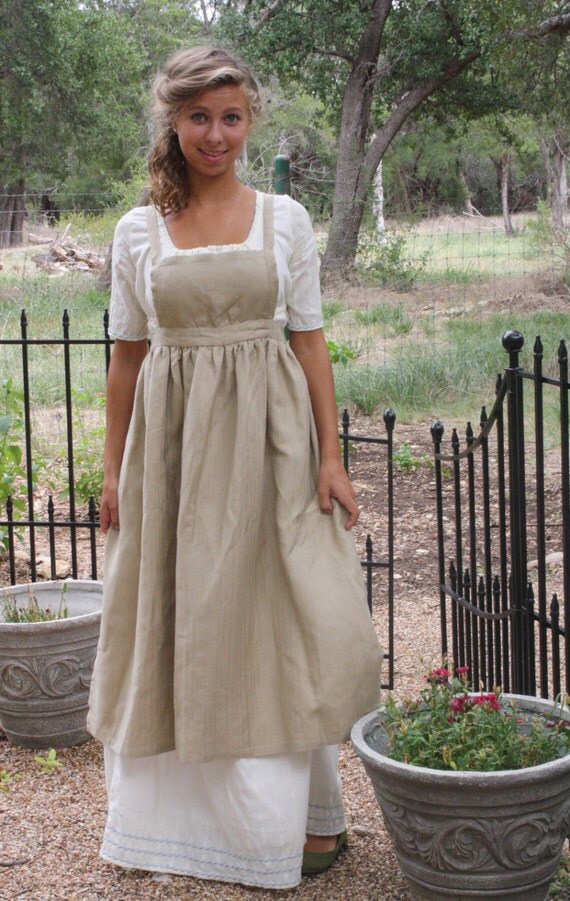
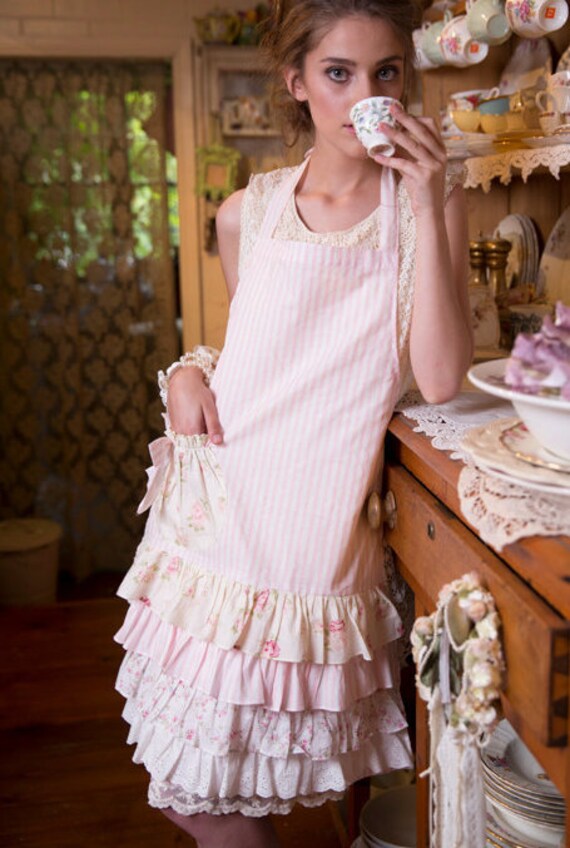
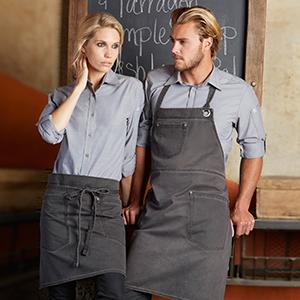


See what I mean?
If you don’t have an apron, you could always try something
nifty like this:

It seems that recently aprons have been equated with an
image of domestic slavery that makes some people, women especially, cringe at
the thought of wearing an apron. However, this
article from the LA Times argues that aprons are experiencing a revival! And
after seeing how many awesome aprons are appearing on Pinterest and Etsy these
days, I have to agree. And just look at how stylin’ this
guy is in his apron (and check out the rest of apronwarehouse.com if you’re looking
to buy a new apron). Does the fedora come with? I hope so.
If you’re a man and feel like aprons are more of a women’s
wear item, let me just say that the first time I really noticed that my husband
was attractive (before we were even dating) was when he came out of his
apartment in his extra-long, heavy-duty kitchen apron (my husband is quite
tall). He was carrying a big pot of something delicious he had cooked himself.
The sunlight hit his eyes just right. In that moment, he was so handsome it
startled me. The whole image said, “I’m a man who knows how to cook and do
things around the house. I take housework seriously and like it. I even have a
nice apron.” That’s a man with competence and skills. That’s attractive.
Remember, an apron is just a cape on backwards. And people
who wear capes are either super heroes or magic workers, and as a homemaker,
you are both. So wear your nice clothes and empower and protect yourself with
your cape—I mean, apron. Of course, you could always put on your cape AND
your apron . . .

If you decide an apron is not for you, that’s fine. But I
hope that decision is not made because you still see aprons as a symbol of
inferior status.
How to Get Dressed
Now that we know what to wear, let’s talk about how to get
dressed. Getting completely dressed in the morning every day takes more
preparation than just having some clean clothes on hand. It’s an investment of
energy (which is why we have pajama day way too often), but it doesn’t take as
much as we sometimes think it does. And the returns are well worth the
investment.
To really make getting dressed happen, you’ve got to start
the night before. So, grab your BOPO. In your “Routines” section, create
headings for morning routines and evening routines. We’ll be adding more to
these routines as we go, but for starters, put “lay out clothing and shoes for
tomorrow” in your evening routine and “get completely dressed” in your morning
routine.
Now, go and pick out an outfit for tomorrow. Maybe it’s not
evening yet, but let’s get a head start on this one today if you can. Decide on
a place in your closet, on your bedside stand, or even on a chair somewhere to
make your “on deck” clothing station. This is where you’ll lay out your
clothing every night. Now, get EVERYTHING you need for your outfit—top, bottom,
socks, underwear, accessories, shoes, everything (unless you’re currently
wearing it, of course).
If you have space, you could put something together like
this:

I don’t have space to do this and the weather changes around
where I live so much that I have to take things a day at a time. But if I could
do this, I probably would.
You don’t need to lay out your apron with your clothing, but
make sure you know where it is and that it’s clean. If it’s not clean (or you haven't bought the Bronx Black Bib Apron with matching fedora yet), plan on
using a big dish towel around your waist or something until you can get
the apron through the laundry or buy one.
Laying out clothing in advance may not seem like that big of
a deal, but have you ever had a day where you pull out some clothes,
put them on, decide they’re all wrong, pull out more, do it again, and before
you know it, your whole wardrobe is strewn around the room as you try to get dressed that day? Maybe I’m the only one?
Well, since I’ve started laying out my clothing the night
before, I haven’t had that happen to me. For some reason, I’m better at
choosing what to wear the night before. In the morning, I don’t waste energy
deciding what to wear; such important decision-making too early is too much.
Instead, I focus on pulling myself together and taking care of my babies.
Mornings are demanding times around my house, and if I can’t get ready fast, I
don’t get ready at all. But if I’ve already cleared the hurdle of deciding what
to wear, it’s a lot easier to make it all the way to doing hair and makeup, shaving, or whatever you've got to do to get looking nice in
the morning.
All right! You have gathered your clothes for tomorrow! Your first step toward completing this assignment is
done.
Now, lay out clothes for the next day every night for a week. And if you’re comfortable doing so, take
a selfie on a day that you feel particularly spiffy after getting ready in the
morning. Post the selfie on our Facebook page!
Remember, getting completely dressed is an energy
investment. You’ll be amazed at the energy returns you’ll get by doing this,
even if the only person that sees you dressed up is yourself.

No comments:
Post a Comment